Works
Selected digital, generative, interactive and physical projects.
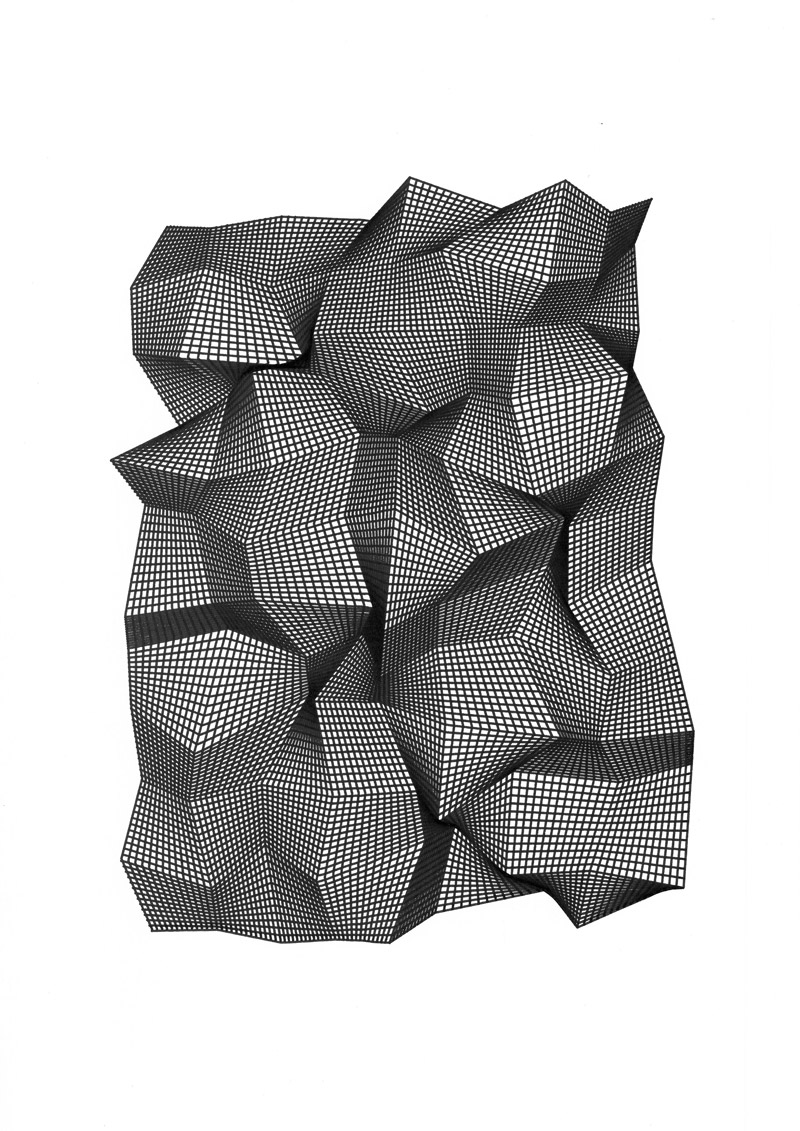 Generative and procedural drawingsPlotter drawings · pigment and acrylic inks on acid-free paper · OngoingGenerative and computational works developed in code and drawn by a computer-controlled pen plotter.Procedural algorithms, parametric equations, digital elevation maps and other data sets are translated into physical drawings.The Samuel Beckett image is based on John Haynes’s 1973 platinum print, Samuel Beckett (452 × 410 mm, image size), presented to the National Portrait Gallery by the photographer in 2018. The plotting algorithm reconstructs the portrait as a maze-like field, using shifts between… read moreGenerative and computational works developed in code and drawn by a computer-controlled pen plotter.Procedural algorithms, parametric equations, digital elevation maps and other data sets are translated into physical drawings.The Samuel Beckett image is… read more
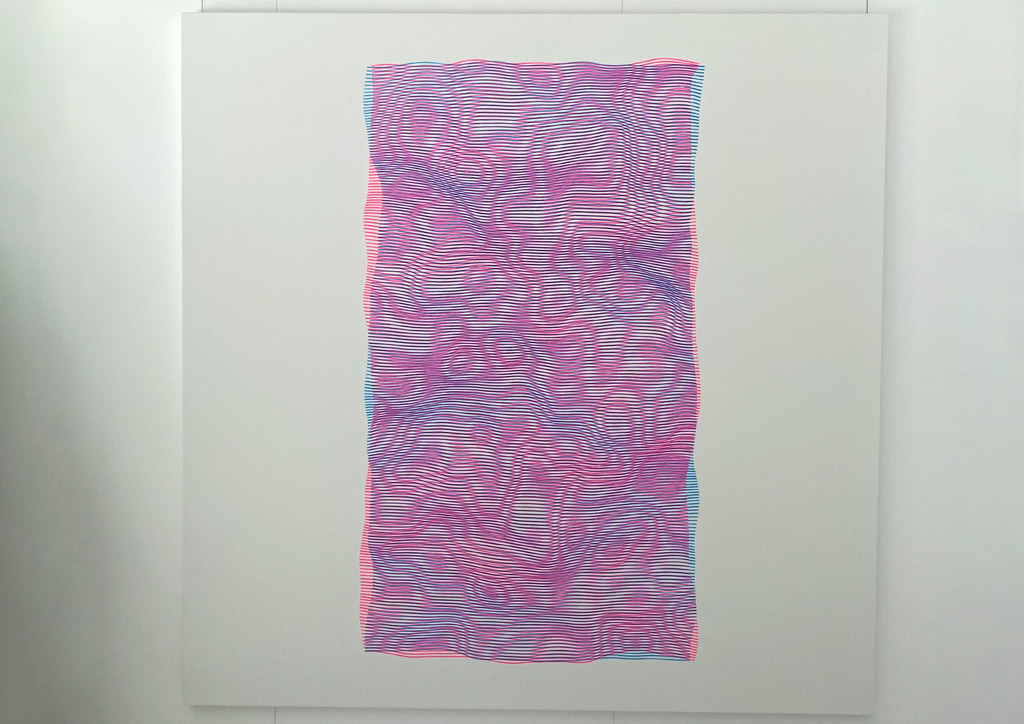 FluidityScreen print on canvas · 2m × 2m · 2023Fluidity was created for and presented as part of the 2023 Arcus Pride Art programme, A Thousand Beautiful Things. curated by Dr Liz Bradshaw across Brookfield Place and the Wynyard Station stairs in Sydney.The exhibition considered how queer art and queer people inhabit multiple worlds, looking at dominant culture through a queer lens. Fluidity was made within that wider context of everyday symbolism, aesthetics and queer points of view. Fluidity was created for and presented as part of the 2023 Arcus Pride Art programme, A Thousand Beautiful Things. curated by Dr Liz Bradshaw across Brookfield Place and the Wynyard Station stairs in Sydney.The exhibition considered how queer art and… read more
 Rewriting FrankensteinA Modern Prometheus · interactive literary artwork and two Twitter accounts · 2016Created to mark the bicentenary of Mary Shelley’s Frankenstein, Rewriting Frankenstein is an interactive exploration of the novel by Neil Jenkins. It takes Victor Frankenstein’s creature, assembled from mismatched body parts, as its analogy.Readers recreate the story word by word, choosing the next word from possibilities that follow the current word elsewhere in Shelley’s original text. Beginning at the opening of the book or from any word within it, each decision splices a new path through the novel… read moreCreated to mark the bicentenary of Mary Shelley’s Frankenstein, Rewriting Frankenstein is an interactive exploration of the novel by Neil Jenkins. It takes Victor Frankenstein’s creature, assembled from mismatched body parts, as its analogy.Readers… read more
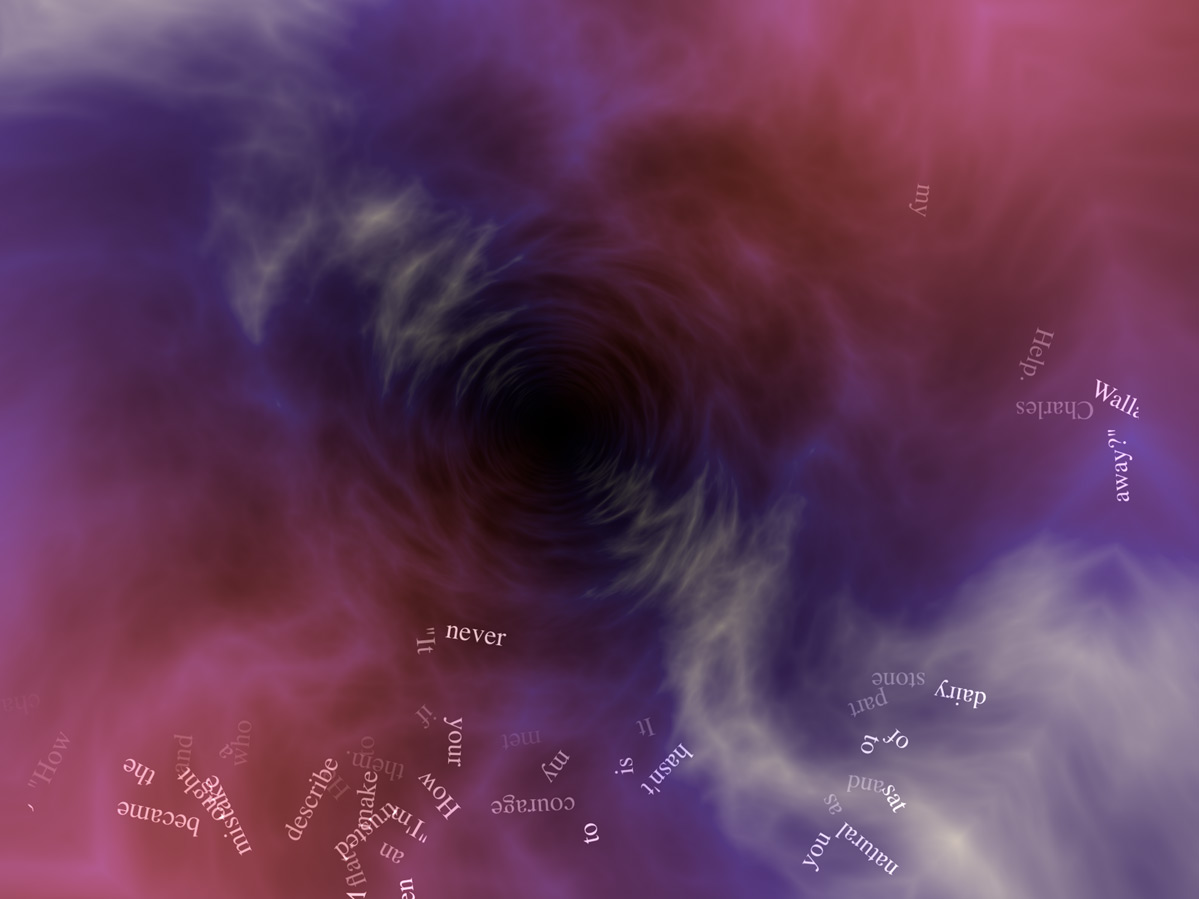 A Wrinkle in TimeCustom software · commissioned artwork · 2014Based on Madeleine L’Engle’s novel A Wrinkle in Time, this piece continues my exploration of the Surrealist Exquisite Corpse and textual cut-up techniques. It takes an existing work of literature and rewrites it word by word: each selected word is followed by one that might appear after it in the original text.In L’Engle’s book, the characters travel by wrinkling time through a kind of wormhole known as a tesseract. In this piece, the reader travels through the text by clicking words, jumping between the… read moreBased on Madeleine L’Engle’s novel A Wrinkle in Time, this piece continues my exploration of the Surrealist Exquisite Corpse and textual cut-up techniques. It takes an existing work of literature and rewrites it word by word: each selected word is… read more
 HorizonsHD video · 11′ 24″ · photographs · custom generative software · 2014Drawing on a series of photographic images from dawn till dusk, Horizons is a constantly morphing colour field, centred on the horizon, that appears to race through the landscape. Drawing on a series of photographic images from dawn till dusk, Horizons is a constantly morphing colour field, centred on the horizon, that appears to race through the landscape.
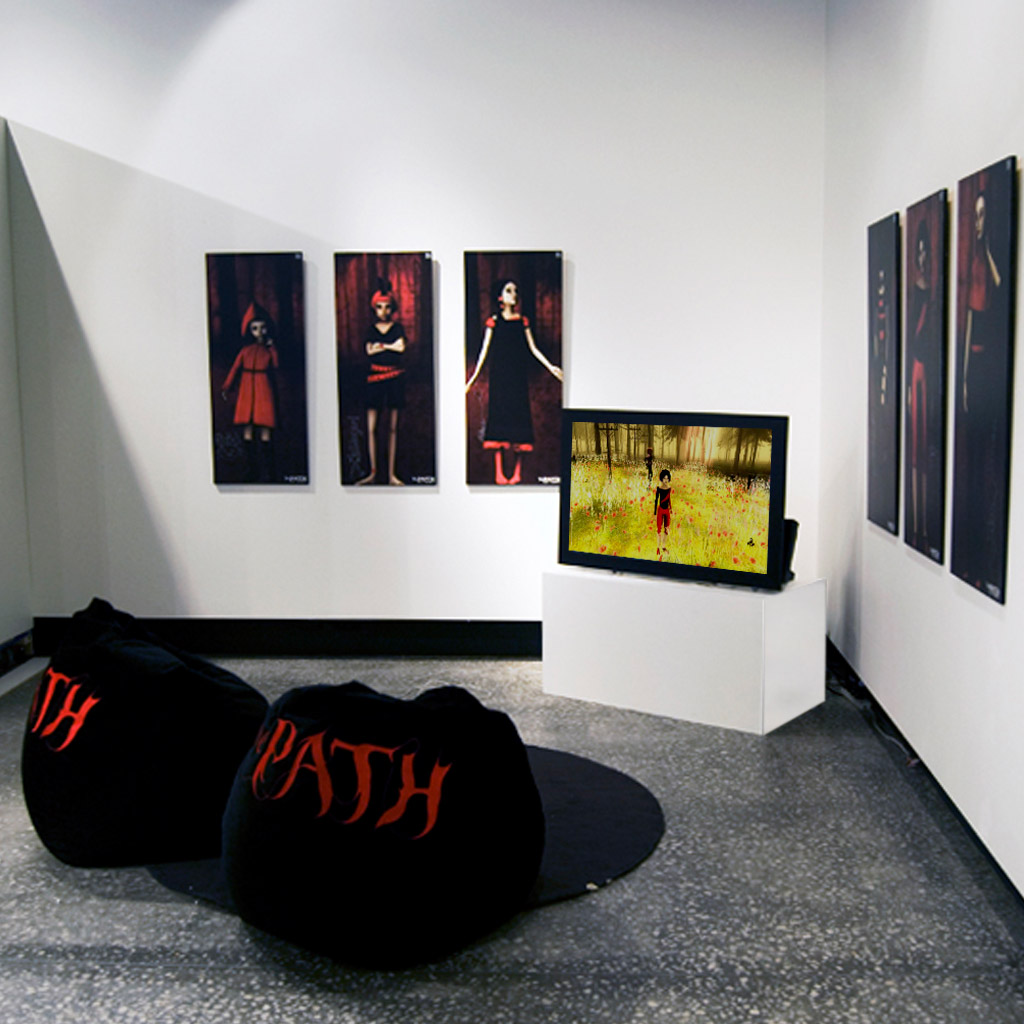 The Garden of Forking PathsCurated touring exhibition · dLux Media Arts · 2009–2013Jorge Luis Borges' 1941 short story "The Garden of Forking Paths" predates the Internet. However, its notions of non-linearity, the storyline surrounding an infinite labyrinthine book that realises multiple paths and futures are echoed in the information age with hypertext, the World Wide Web and the form and structure of computer games.Just as Borges and his contemporaries pushed the envelope of narrative form, artists have created and modified computer games, experimenting with notions of what a game is… read moreJorge Luis Borges' 1941 short story "The Garden of Forking Paths" predates the Internet. However, its notions of non-linearity, the storyline surrounding an infinite labyrinthine book that realises multiple paths and futures are echoed in the information… read more
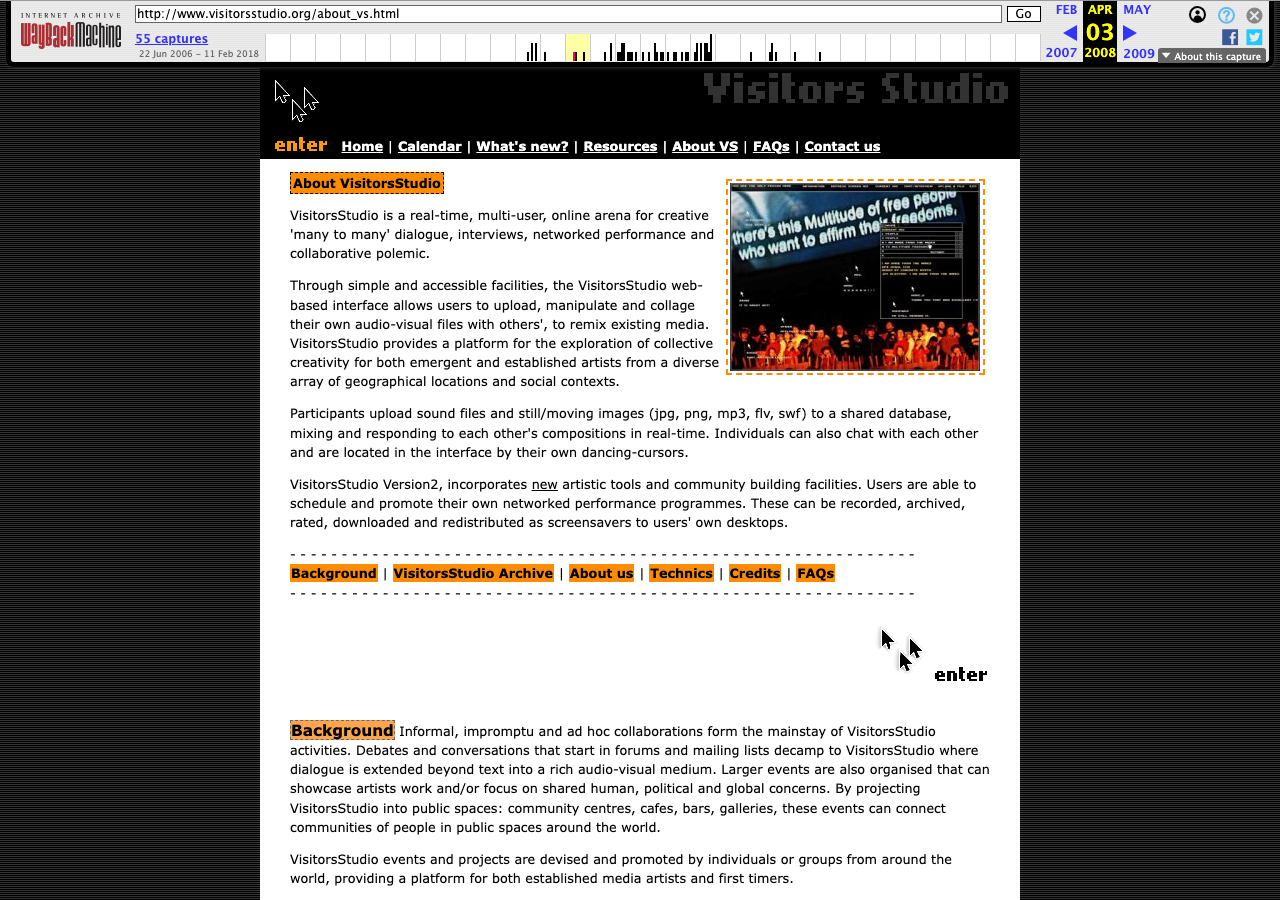 VisitorsStudioLive multi-user audiovisual mixing environment · 2003–2010VisitorsStudio turned the browser into a shared audiovisual performance space. Participants in different locations could upload sound, still images, animation and video, combine as many as eight layers in real time, chat and respond to one another through animated cursors.The platform was developed at Furtherfield under the creative direction of Neil Jenkins, Marc Garrett and Ruth Catlow, with its interface and backend designed and programmed by Jenkins. It developed alongside FurtherStudio, initially… read moreVisitorsStudio turned the browser into a shared audiovisual performance space. Participants in different locations could upload sound, still images, animation and video, combine as many as eight layers in real time, chat and respond to one another… read more
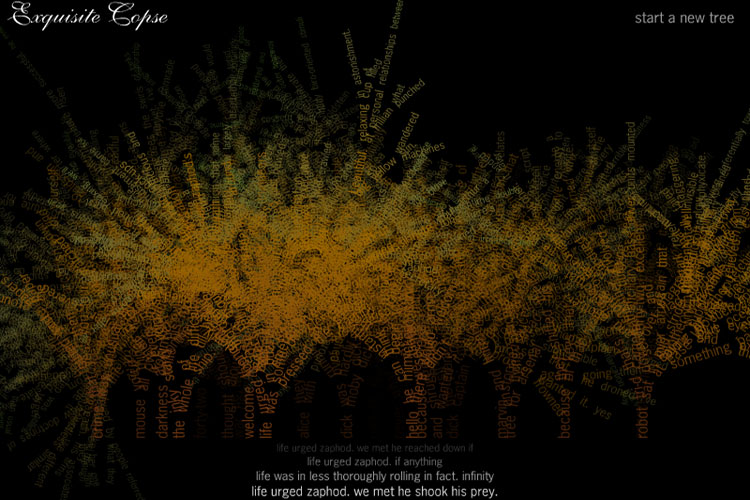 Exquisite CopseInteractive Flash artwork · commissioned for Net:Reality · 2005A play on the Surrealist game Exquisite Corpse, Exquisite Copse visually rewrites existing works of literature into a forest of word trees based on seed words entered by visitors. Each branch grows with words that might follow in the original text.The collected trees form a copse: a Surrealist landscape and journey through myriad narratives, created and influenced by both visitor and author.Commissioned for Net:Reality, the work toured 20-21 Visual Arts Centre, Scunthorpe (23 July–29 October 2005); Q… read moreA play on the Surrealist game Exquisite Corpse, Exquisite Copse visually rewrites existing works of literature into a forest of word trees based on seed words entered by visitors. Each branch grows with words that might follow in the original text.The… read more
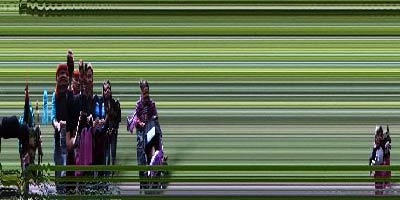 Slit CameraOpen-source digital slit scanner · Processing · 2004Slit Camera is a complete free-source digital slit scanner written in less than a page of Processing code. Rather than recording a conventional frame, the program repeatedly samples a narrow slice of live video and adds it to a continuously accumulated image, stretching movement across time.Golan Levin includes the work in An Informal Catalogue of Slit-Scan Video Artworks and Research. The catalogue identifies the original as Processing version 68 code and notes that later Processing examples for live… read moreSlit Camera is a complete free-source digital slit scanner written in less than a page of Processing code. Rather than recording a conventional frame, the program repeatedly samples a narrow slice of live video and adds it to a continuously accumulated… read more
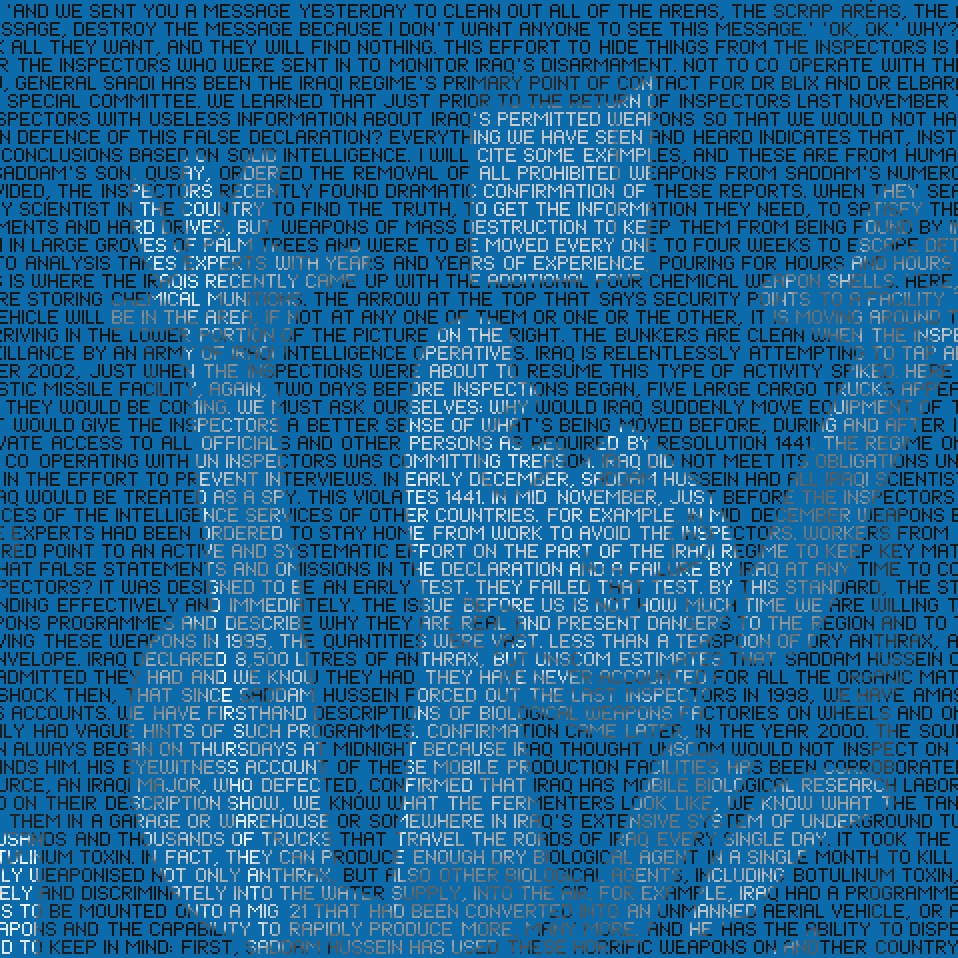 Guernica [cover-up]Digital image and print · 2m × 1m · 2003Guernica [cover-up] was made after a tapestry reproduction of Picasso’s anti-war painting was concealed behind a blue curtain and a row of flags at the UN Security Council while Colin Powell presented the United States case for war on 5 February 2003.The intervention converted the act of concealment into the image itself. A large-scale print was exhibited in Screenshot(s) at Shrewsbury Museum & Art Gallery in 2006 alongside a projected version of Wartime. Private collection. Guernica [cover-up] was made after a tapestry reproduction of Picasso’s anti-war painting was concealed behind a blue curtain and a row of flags at the UN Security Council while Colin Powell presented the United States case for war on 5 February 2003.The… read more
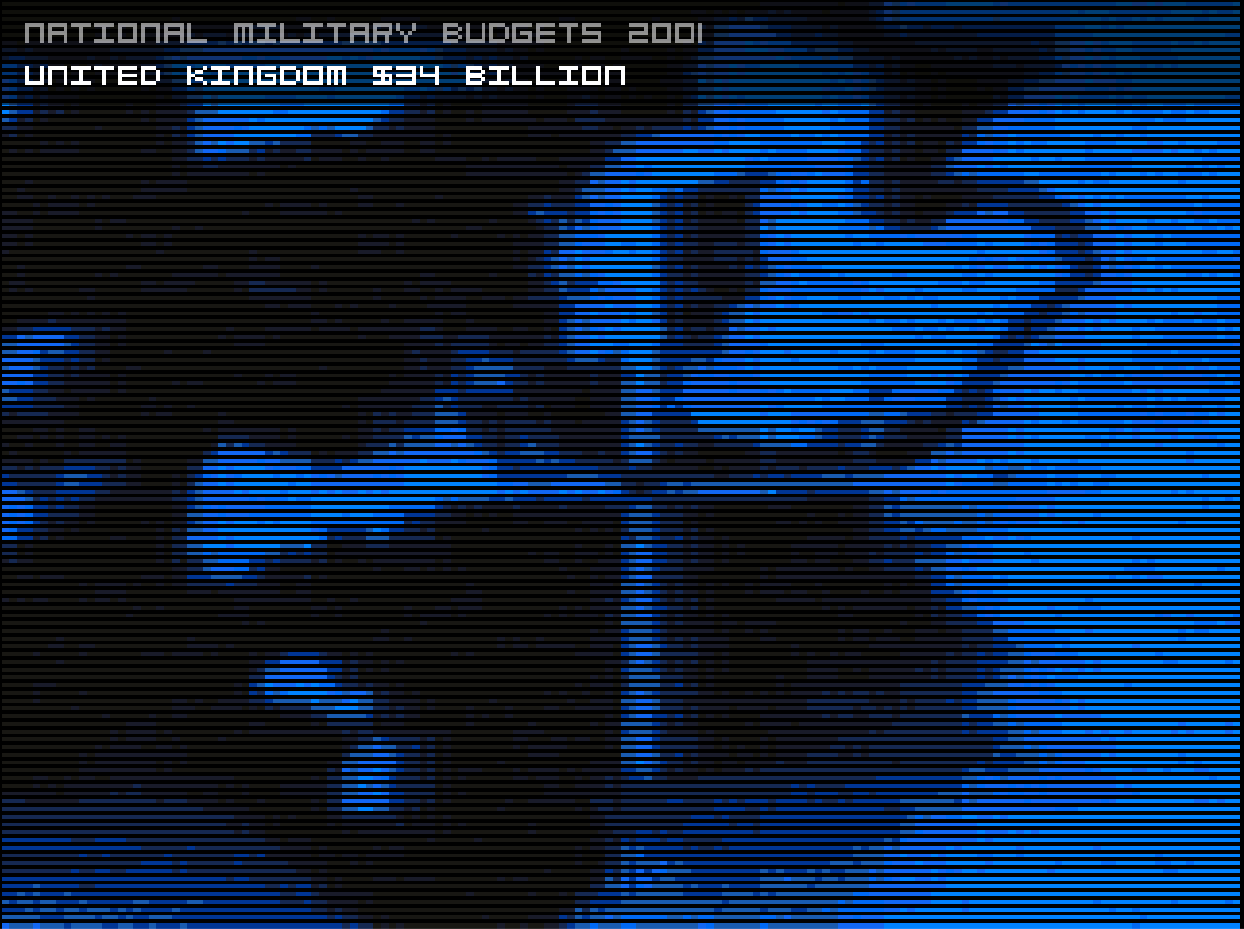 Wartime [calculated $817,800,000,000]Projected generative work · calculated $817,800,000,000 · 2001Wartime [calculated $817,800,000,000] is a computational anti-war work created for the online Wartime project. Its calculated figure is presented as an insistent screen-based image, translating the scale of war expenditure into a stark numerical form.The original project page placed the work within the Anti-War Web Ring, connecting it to a wider network of online anti-war works through previous, next, list and random navigation.A projected version was included in Screenshot(s) at Shrewsbury Museum & Art… read moreWartime [calculated $817,800,000,000] is a computational anti-war work created for the online Wartime project. Its calculated figure is presented as an insistent screen-based image, translating the scale of war expenditure into a stark numerical form.The… read more
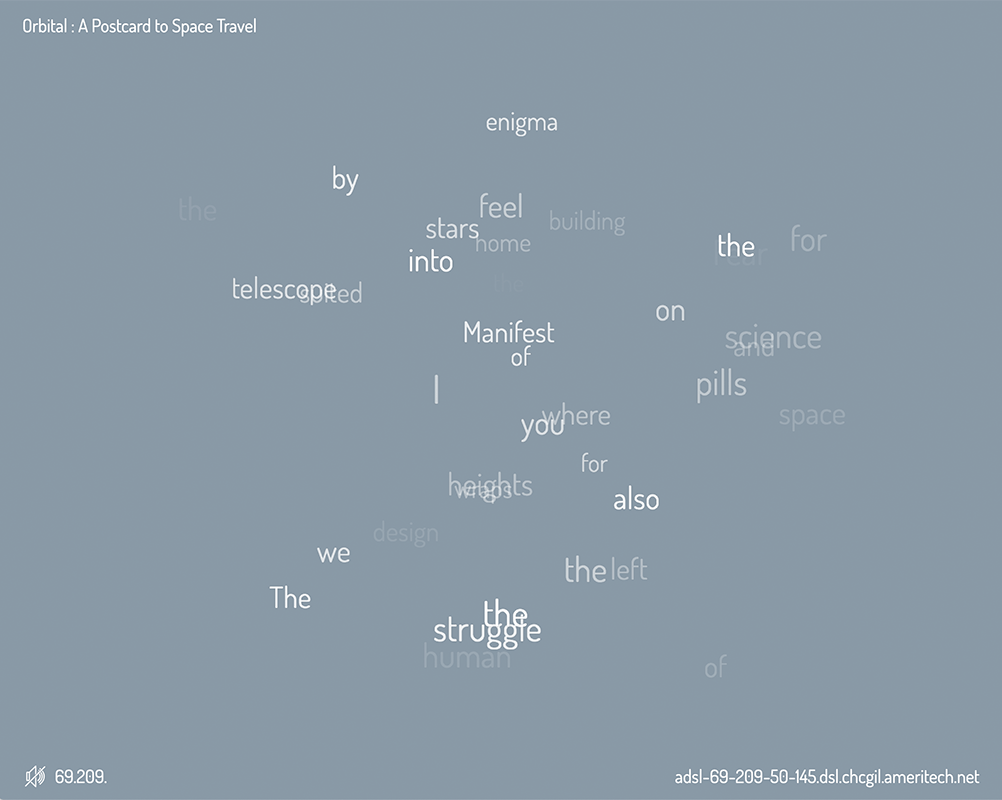 OrbitalPoem and interactive internet artwork · with Mac Dunlop · 2000A postcard to space travel, inspired by imagining a letter to or from a traveller in space.Words arrive according to the visitor’s network address, weaving poetic and programming languages together. The original poem is by Mac Dunlop; the Orbital engine was devised and programmed by Neil Jenkins. A postcard to space travel, inspired by imagining a letter to or from a traveller in space.Words arrive according to the visitor’s network address, weaving poetic and programming languages together. The original poem is by Mac Dunlop; the Orbital engine… read more
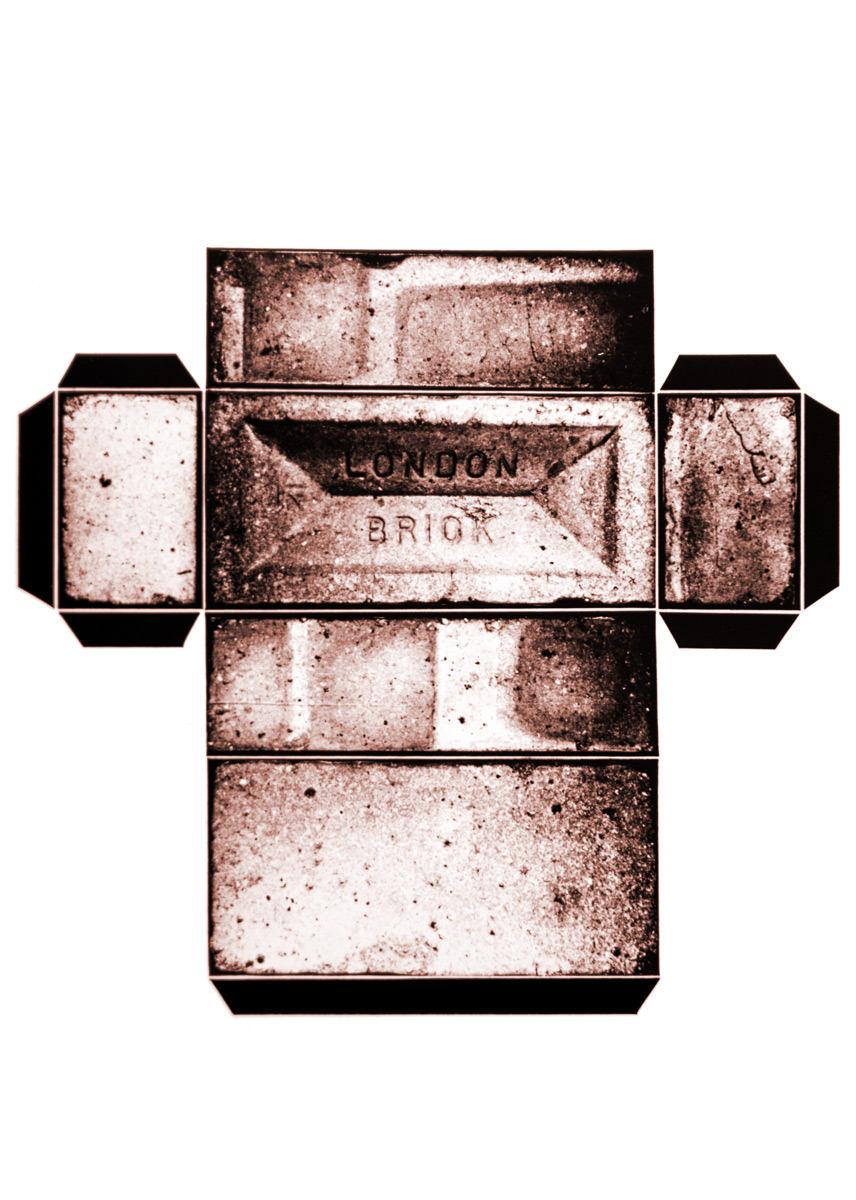 Cardboard CityArtist multiple · Words & Pictures, Issue 4 · 1995Cardboard City appeared in Issue 4 of Words & Pictures — Ultra-Paranoid (Extra-Spatial) Portable Art!, the object-based art magazine created by Iain Forsyth and Jane Pollard.Released in November 1995 as a hand-numbered edition of 100, each copy gathered twenty artist multiples inside an A5 cardboard box. The issue included a preface by Tracey Emin, an introduction by Martin Maloney and launched at the London Artists’ Book Fair on 9 November 1995. Cardboard City appeared in Issue 4 of Words & Pictures — Ultra-Paranoid (Extra-Spatial) Portable Art!, the object-based art magazine created by Iain Forsyth and Jane Pollard.Released in November 1995 as a hand-numbered edition of 100, each copy gathered… read more
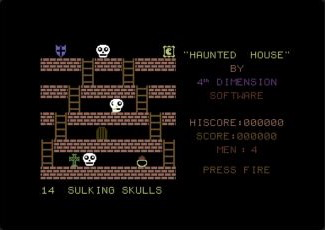 Haunted HouseCommodore 64 game and screen-editing system · 1985Haunted House is a Commodore 64 game and screen-editing system I made in 1985 under my pseudonym, 4th Dimension Software. It is a small world of connected rooms, treasures, enemies and doors, built within the particular limits of the machine.Its built-in 32-screen editor operates as an early content management system: rooms could be created, named, saved and loaded without altering the game code. In this realm of personal-computer work, it is a remarkably early example of separating authored content from… read moreHaunted House is a Commodore 64 game and screen-editing system I made in 1985 under my pseudonym, 4th Dimension Software. It is a small world of connected rooms, treasures, enemies and doors, built within the particular limits of the machine.Its built-in… read more
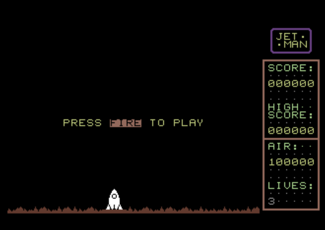 JetmanCommodore 64 game · 1984Jetman is a Commodore 64 game made by Neil Jenkins under the name 4th Dimension Software.This browser release runs the reconstructed game in a self-hosted C64 runtime, with keyboard and onscreen joystick controls. Jetman is a Commodore 64 game made by Neil Jenkins under the name 4th Dimension Software.This browser release runs the reconstructed game in a self-hosted C64 runtime, with keyboard and onscreen joystick controls.